
The Wound and the Crown
August 26, 2026
Pathos makes them feel you. Ethos makes them believe you. Here is how I use both, and how you can too.
Every song is trying to win two arguments at once. The first is feel this. The second is trust me. A record that wins neither is just syllables keeping time; a record that wins both can change how somebody sees their own life. I’ve been chasing both for a decade, and this is the closest I’ve come to writing down how it works.
Those two arguments are old enough to have Greek names. Twenty-four centuries ago, Aristotle broke persuasion into three tools. One was logos, the appeal to logic, the reasoning of the thing. The other two are what most music actually runs on. Pathos is the appeal to emotion: not reporting a feeling but transmitting one, until the listener is standing in the room as the floor tilts. Ethos is the appeal to character: the evidence that you should trust the person talking, that they have the standing, the credibility, the right to say it at all.
Pathos makes them feel you. Ethos makes them believe you. Everything else is production.
The masters, briefly
Every great persuader is a specialist in one or both, and the technique is visible once you know to look.
On the pathos side, the move is always the same underneath the style: build the scene so precisely that the listener drops through it. King ran cadence and hard, concrete images (a mountaintop, a promissory note the country left unpaid) so the feeling gathered in the body a beat ahead of the mind. Tupac wrote from the diary: he said his mother’s name and his own fear out loud, and let the exposure be the argument. Kendrick narrates his doubt and his guilt, lets you watch him lose the thread, and the nerve to be seen unsure is exactly what lands. Different rooms, one key: pathos is the discipline of being caught bleeding on purpose.
On the ethos side, credibility is the currency, and the masters mint it differently. Jay-Z keeps a ledger: every boast is backed by the receipt of the come-up it grew from, so you believe the mogul because he showed you the hustle. Nas opened a window: Illmatic is reportage so exact it plays as sworn testimony, and you trust it because it sounds seen. Both make you concede the narrator has standing to speak.
That’s the lineage I’m trying to earn a seat in. In my other life I’m a licensed attorney; on record I answer to a few names, Fonzerelli, King Dapper, Harry Romantica. Keep that crowd in mind, it pays off later. What follows is my own machinery, laid out honest, and how you can build yours.
My pathos: make them feel it
Pathos is not the mention of pain. “I’ve been through a lot” is a status update; nobody’s chest moves. The people who do it best never tell you they’re bleeding. They arrange the room so that you bleed. I do it three ways.
The rebuild. On “Feel Like This” I put my own worth back together in real time, inside one run of bars:
“It was pain knowing that I couldn’t save everybody / If I didn’t save me I couldn’t save anybody… When we was late on the rent we ain’t nobody… Had to look in the mirror like I am somebody!”
Watch the one word turn: everybody → anybody → nobody → somebody. Each version resets where I stand in the world: the people I felt responsible for, the ceiling of what I could do, the verdict poverty handed me, and finally the self-recognition that gets me back on my feet. Four words doing the work of a whole memoir.
The anesthesia. On “Barely Feel” I tried something I don’t hear much: I turned the flex against itself. The strip club, the money, the women, every image the genre trains you to read as a win, I reassigned as a symptom. The hook says it plainly: I can barely feel the rush now. The trophies pile up and the feeling drains out of them.
“But no bitch in the world couldn’t fill that void / In an empty room hear nothing but noise.”
Then I name the loop, one shot, two shot, need more rounds, and the trophies turn into the diagnosis. That’s harder than saying “money doesn’t buy happiness.” I didn’t want to state the lesson. I wanted you to watch the dose stop working.
The mask. When the pain runs too hot for me to hold bare-handed, I put on a costume. On “Brand New Day” and “Hero in Your Eyes,” the superhero frame isn’t decoration. It’s the load-bearing wall, and it solves a problem I couldn’t solve any other way: how do you admit you’re powerless without stopping being the hero? Spider-Man saves strangers and loses his own people; Superman is a god who still answers to the law and still carries a kryptonite. From behind the mask I can say the thing that would cost too much said plain:
“Kid trauma in adult space… I built bonds just to see it all get erased / It’s like you innocent but you can’t prove the case”
And the confession doesn’t take the crown off my head. The weakness doesn’t cancel the hero. What I do in response to it is the thing that makes me one. The kryptonite authenticates the cape.
The one I can’t perform like that is “PRESENCE.” I wrote it for my cousin Khalil, and it’s the single grief I refuse to costume, and refuse to comfort. I walk all the way up to the question nobody can answer, why would God choose not to heal him, and then the words quit on me:
“I just don’t get it…”
That’s where the verse ends. No resolution, no last bar. I always have one more line, and there I didn’t. I wasn’t going to fake understanding a God who chose not to heal, so I stopped on the not-understanding, and the silence after it does more than any bar could. Take the mask off, and the words give out.
My ethos: make them believe you
Rap already has a house answer for ethos, and it’s the flex: I have the car, the chain, the numbers, so believe me. Success as proof of character. My best credibility runs the other way. I build it out of narrative and cost, not receipts. And here’s the law underneath all of it, the part it took me years to learn: the strongest ethos is never the reputation you bring into the song. It’s the trust the writing earns on the spot. Aristotle drew the same line: character proven by the speech beats status claimed before it starts. It’s the difference between telling you I’m brave and walking you to the door I had to walk through.
I have a credential most rappers don’t. In my other life I’m a licensed attorney. The tell is that my best ethos barely touches it.
The chronology. On “Mama Crib” I never once say I’m brave. I just make you watch the decisions: Detroit to Arkansas, four years that gave me manhood, then the hinge:
“I graduated didn’t have a single cent to my name… Hit every shop tryna hustle with the brand… All I had was a sketchpad and my iPhone… Another leap of faith to the law school game.”
Somebody who knew nothing about me would still trust the ending, because the sequence is the proof. The biography argues its own case.
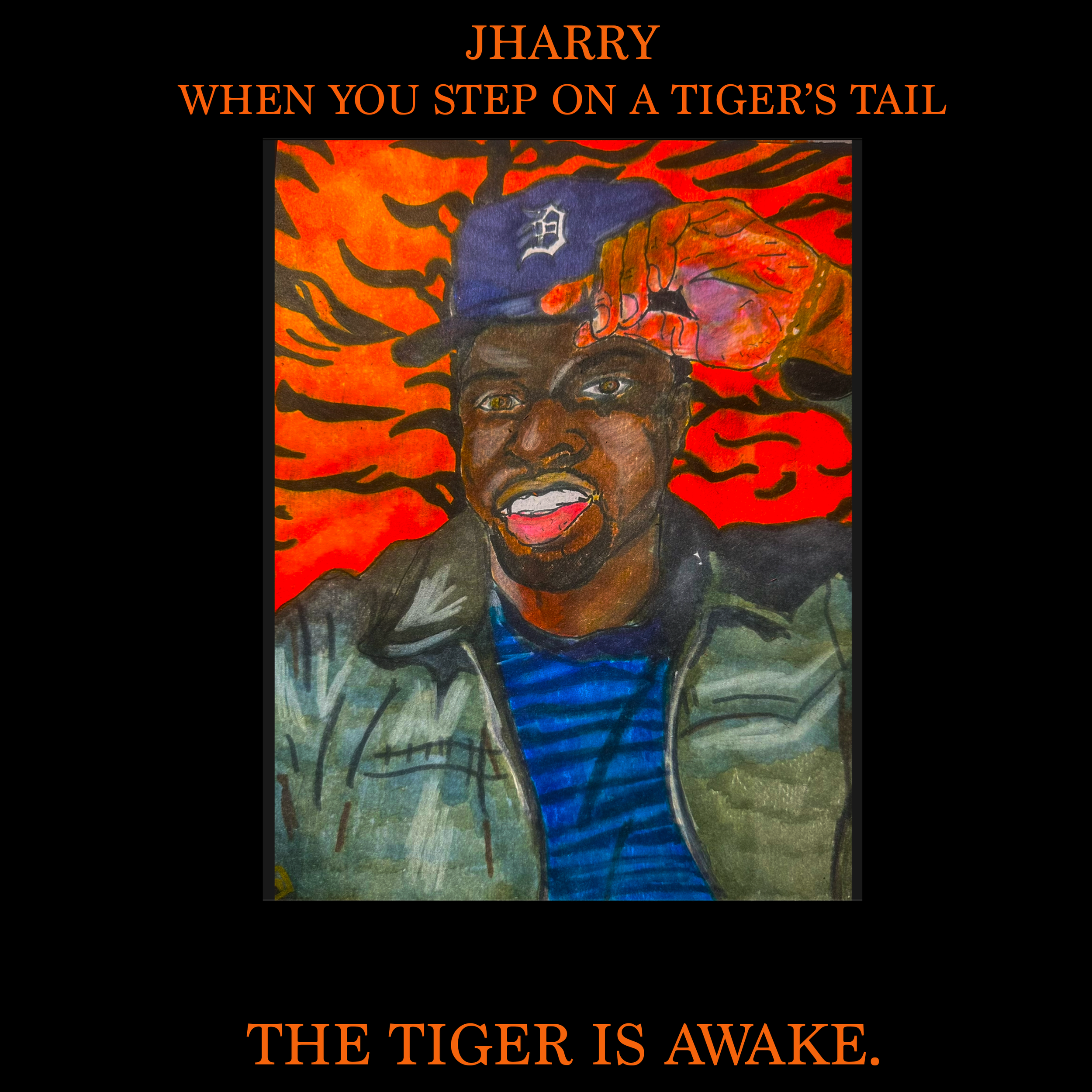
The recurring identity. I’ll flash the flat credential for a quick hit: “The lawyer, that’s me / My service not free / You pay me my fee / You fight or take plea.” But the real work treats the license as a recurring character, one that carries grief, family expectation, racial contradiction, and public duty. On “Reparations” the credential and the contradiction land in one breath:
“Everyday I’m reminded that I’m still a nigga / Even as a lawyer in society.”
On “Main Character Syndrome” the wordplay opens onto why the lawyer exists at all: “Have a strong sense of justice / Fight for right… How they treating the poor make my soul burn.” That’s where the legal ethos stops being a clever double meaning and becomes a moral position I actually hold.
The signature. Now the crowd of names pays off. For a whole song my alter egos run their mouths: Fonzerelli’s excess, the untouchable boasts, the kings stacked three deep. Then, at the very end, I take every mask off at once:
“My name is Jaevonn Harris.”
The personas make the claims; I sign for them. It lands like the affidavit at the bottom of a filing: the line, in my own name, that says this is true.
The fusion, and the thing that can’t be copied
Pathos and ethos usually run as separate engines. The hardest thing I try to do, and the thing I’m proudest of when it works, is get the exhaust from one to ignite the other.
That’s “Hero in Your Eyes,” for my late great-grandfather, Joseph Preston. I gave him a real hometown, real service, real jokes, real lessons. He taught me to tie a tie and to keep moving after a loss. And in the turn of the song, the grief and the credential stop being two things:
“When I finally graduated man he dropped his jaw / My only goal left make sure I pass the bar… I failed to get licensed while he was alive / Thought the Lord would spare him I’m going down inside.”
Read it twice. The authority is being earned emotionally, in front of you. You trust the lawyer because you watched the grief, the failure, and the debt I inherited standing behind the license. Nobody can reproduce that verse. Not because they can’t say the word “lawyer,” but because in my life the wound and the credential are the same event, and it’s true.
That points to the one device I can’t be copied on. Line up the details that keep surfacing across my catalog. Khalil and the unanswered prayers, Joseph Preston and the bar exam, Detroit and Arkansas, the asthma, the hot closet, graduating broke, the sketchpad and the iPhone, law school and failure and finally the license. They never contradict each other. Across years, moods, and personas, the facts hold. Every song backs up the others.
There’s a name for that, and it comes from the law I practice. A witness gets believed when the early account and the later one line up. We call it prior consistent statements, brought in to answer the charge that a story was invented for the occasion. Testing credibility that way is my training. And whether I meant to or not, I’ve built a body of work that would survive its own cross-examination: a decade of testimony that corroborates itself. Most rappers’ credibility can’t be fact-checked. Mine invites the check, and clears it.
For you, in your raps, or whatever you make
None of this needs a law degree or a Detroit block. It needs the structure, and the structure travels. Across the songs of mine that actually work, one shape keeps coming back:
a specific memory → the wound inside it → an honest question you can’t answer → the principle that carried you anyway → the declaration you’ve earned the right to make.
You can hear it in “PRESENCE” (memory, grief, the question I put to God), in “Feel Like This” (poverty, suffocation, self-affirmation), in “Mama Crib” (departure, risk, initiative, authority). Build in that order and the verse does both jobs at once.
Four things I’d tell you to carry out the door:
Be specific, or be forgotten. “I lost somebody” is a report. “Riding mountain bikes on top of the hill” is a place a stranger can stand. Name the person. Name the object. Detail is the floor the listener falls through.
Don’t flinch first. The most common way I’ve killed my own pathos is the flex reflex, steadying an open wound with a punchline or a designer name two bars after I opened it. When you feel the urge to reach for the cool line, that urge is a map. It marks the exact spot you were supposed to leave bleeding.
Earn it, don’t announce it. Let them watch you make the decision that proves the trait instead of claiming the trait. Walk them to the door; don’t describe your nerve.
Mine where your strength cost you something. Anybody can list their wins. Your one unrepeatable verse lives where your authority was paid for, the loss that made the victory mean anything. That’s the song only you can write.
The tools are 2,400 years old and free to whoever picks them up. Make them feel it. Make them believe you. And when you find the wound that forged your crown, don’t cover it. Set it in the metal, where the light can catch it. The king who can name every scar is the only one anybody trusts to wear the gold.
visit gettothecorner.com
follow me on x.com/onlyonejaevonn