
Talk Less, Land Harder: How to Hold a Room When It Matters
Notes on presence, framing, and silence — for the rooms that decide things. April 27, 2026.
Most public speaking advice is built for people who are scared to talk. That’s not the problem most of us actually have. The real problem is walking into a room where something is on the line and not knowing how to hold yourself in it. A panel where people are sizing you up. A pitch where the check is in the room. A meeting where one wrong sentence undoes a year of work. That’s a different game, and the standard tips — slow down, breathe, picture the audience naked — don’t help you play it.
I’ve had to walk into those kinds of rooms across law, music, art, and business. What kept me solid wasn’t volume or charisma. It was control. Five things, specifically. None of them are tricks. All of them are usable Tuesday morning.
Stay in your natural pocket
The fastest way to lose a room is performing a version of authority instead of operating from your own. If you’re naturally calm, stay calm. If you’re naturally sharp, stay sharp. If you’re naturally funny, don’t switch into corporate-robot voice because the room “feels formal.” People can smell the gap between who you are and who you’re pretending to be, and that gap is exactly where credibility leaks out.
Most folks over-smile, over-explain, or over-talk trying to win a room. They think they’re adding value. They’re diluting themselves. Your baseline already commands the attention you’re trying to manufacture — you just have to trust it enough to stop hyping it up.
Set the frame before you answer anything
If you walk into a room reacting, you’re already behind. You have to decide how people are going to view you before they start deciding for themselves. That means acknowledging what’s real, but putting it in the right context. Same facts, different framing — one version sounds like a problem, another sounds like growth, awareness, or strategy. If you don’t set that frame, the room will set it for you, and you’ll spend the rest of the conversation defending against a story you didn’t write.
When you’re freestyling under pressure and need a structure to fall back on, run this: Point. Example. Takeaway. State what you mean, ground it in something real, land the implication. Three beats. You’ll sound clear even when you didn’t plan a word of it.
Your range is the advantage
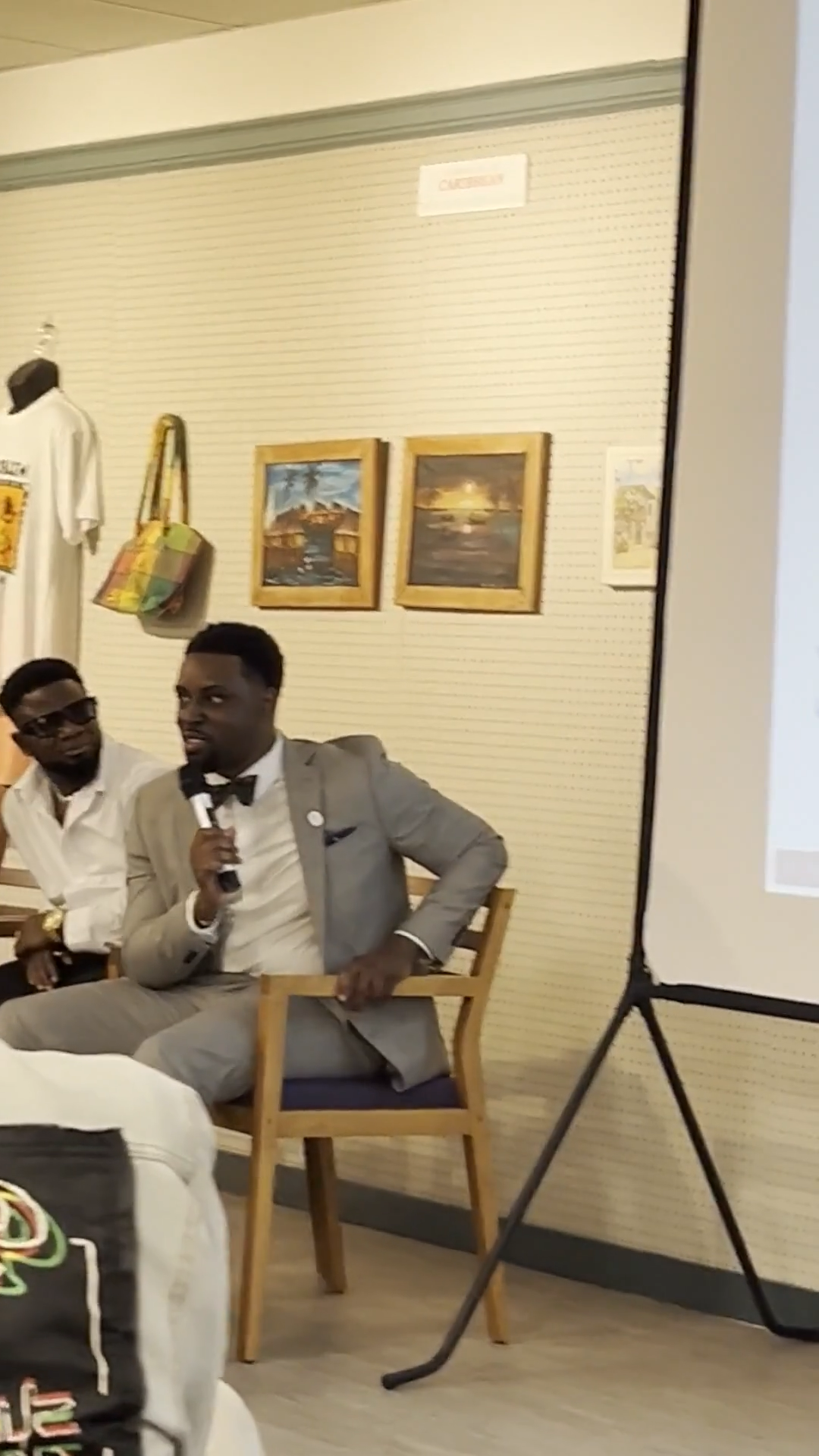
If you’ve been told you’re “too much” of one thing for certain rooms — too creative for the boardroom, too analytical for the studio, too street for the gallery, too polished for the block — that range is your moat. Most people only work in one lane. They’ve got one register, one voice, one mode. So when somebody walks in who can move between worlds without switching personalities, the room feels it immediately.
Don’t water yourself down to match a context. The range people called “too much” is the same range that makes you memorable when the meeting’s over and they’re trying to describe you to somebody else.
Read the room before you try to lead it
Range without discernment is chaos. Every room has a register, and part of the job is reading which one before you open your mouth. Some rooms want structure. Some want personality. Some want precision. Some want heat. The personal stuff that genuinely shapes how you make decisions — your faith, your intuition, your spiritual practice, the dreams, whatever it is for you — belongs in some rooms and not others. In a creative room, that specificity is exactly what makes you magnetic. In an institutional room, it reads as unfocused.
Same person, same truth, different surface. That’s not code-switching. That’s awareness.
Silence is leverage
The pause before you answer is not dead air. It’s the sound of somebody thinking. Most people rush to fill silence because they think it makes them look unsure — but it’s the opposite. The person who pauses reads as deliberate. The person who fills every gap reads as anxious. In a high-stakes room, that distinction is everything.
Think of it like writing a bar. If it’s hard, you don’t repeat it — you let it breathe. Same thing on a podium, in a hearing, on a Zoom with people deciding whether to fund you. Say it once, clean, and let the room sit with it. Nine times out of ten they’ll lean toward you in that pause, not away.
Know who you are before you walk in
This is the most important one. If you don’t have a clear sense of your identity, your voice will sound unsure no matter how clean your delivery is. If you do, you’re not searching when you speak — you’re reinforcing.
That’s why the prep that actually matters isn’t rehearsing what you’ll say. It’s getting clear on what you represent before you walk in. When the hard question lands and you don’t have a scripted answer, what you fall back on is your sense of self, not your notes. Get that part right and the delivery handles itself.
The real point
Public speaking, in the rooms that matter, isn’t about being a great speaker. It’s about being a clear, grounded version of yourself in front of people who are deciding something. The advice industry treats it like a performance skill. It isn’t. It’s a self-knowledge skill with a delivery layer on top.
You don’t need to be louder. You need to know your baseline, set your frame, trust your range, read the room, respect silence, and walk in already clear on who you are. Everything else is decoration.
Visit gettothecorner.com
Follow me on x.com/onlyonejaevonn