
WE CHEATED.
Nov 3, 2026
Use every unfair advantage you’ve got.
“We cheated.”
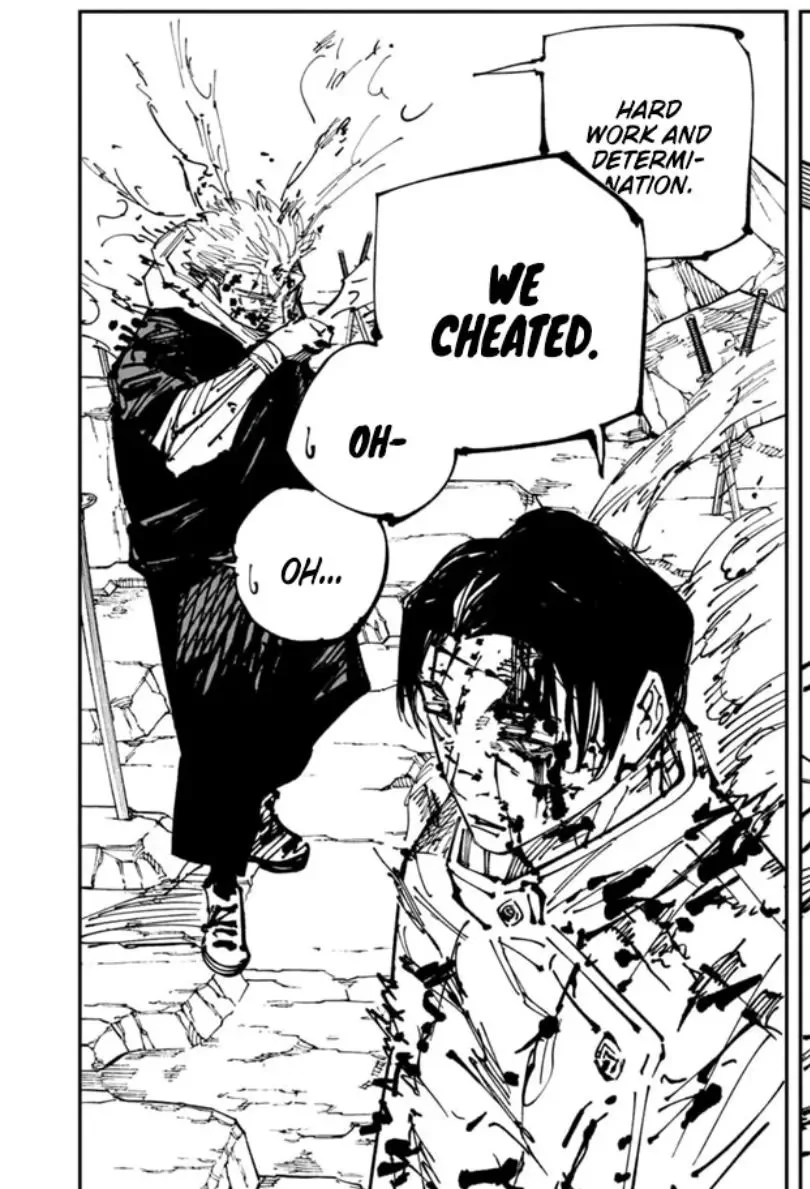
There’s a moment in the fight against Ryomen Sukuna in Jujutsu Kaisen that I keep coming back to. Sukuna notices Yuji Itadori and Yuta Okkotsu have gotten dramatically stronger in about a month and asks what they’ve been doing. Yuji starts in on hard work. Yuta cuts him off: “We cheated.” Later the manga shows how. They used Ui Ui’s soul-swapping technique, with Kusakabe swapping souls with Yuji to teach him Simple Domain and Yuta swapping with Gojo to learn the basics of Limitless. (Sportskeeda)
They weren’t just practicing harder. They changed the conditions they were learning under, and that distinction is everything. The older I get, the less interested I am in proving I can do things the hard way. I’ve struggled plenty. What interests me now is leverage: making my advantages work so well that my results look out of proportion to the effort people see. Life isn’t fair. I didn’t make it that way. But I’ll be damned if I compete at a disadvantage on purpose just to make somebody else comfortable.
R1, R2, L1, X.
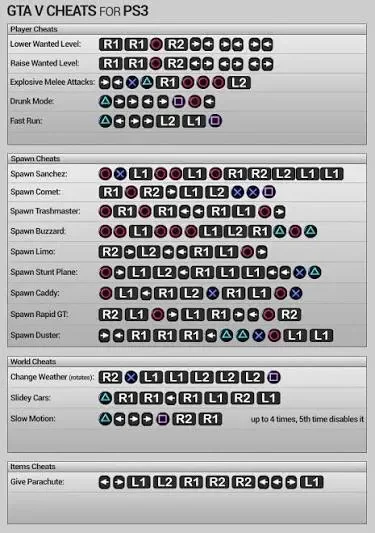
If you grew up on Grand Theft Auto: San Andreas, your thumbs still remember it: R1, R2, L1, X, Left, Down, Right, Up, Left, Down, Right, Up. Full health, full armor, $250,000, and your car fixed. You could grind missions for hours, or punch in a sequence Rockstar built into the game on purpose. Knowing the codes was social currency, passed along by magazines, older siblings, and the kid at school who knew everything. The world didn’t change. The missions didn’t change. Your relationship to the obstacles changed.
That’s how I think about unfair advantages in real life. People work themselves into exhaustion on obstacles somebody else already knows how to navigate. They pay for things they could learn and wait on permission from institutions they could build alternatives to. Sometimes the difference between two people isn’t intelligence, work ethic, or talent. One of them just knows something the other doesn’t. That’s unfair. That’s also life.
Cheat the Difficulty. Not the People.
Before anybody screenshots this out of context: I’m not telling you to steal, deceive customers, fabricate credentials, or break the law. I’m an attorney, and a fraudulent advantage is just a liability that hasn’t matured yet. The games draw this line too. In GTA V, the codes work in story mode, where it’s you against the game. They don’t work in GTA Online, where it’s you against real people, and cheating there can get you banned. (GTA BOOM)
When I say cheating, I mean the legitimate use of information, skills, and resources to change how hard something is. And a code doesn’t make you good at the game. You can spawn the fastest car in San Andreas and still crash into the first building you see. That’s why Yuji and Yuta work as a pair: hard work builds your capabilities, and the edge expands what they can do. The point isn’t to skip developing skill. The point is to stop limiting yourself to skill alone.
Some People Inherit the Codes. Others Have to Find Them.
Let’s not pretend everybody starts even. Some people inherit money, connections, property, and credibility, and they can take risks because failure won’t threaten their survival. If you have those advantages, use them responsibly. If your parents can help you buy a home or your family can make an introduction, take it. Just don’t confuse your advantages with proof that everybody had the same shot, or mistake them for a guarantee.
Other people have to manufacture their advantages through education, discipline, and years of trial and error. That’s closer to my road. I didn’t come into the world knowing how to run a creative business, read a contract, make art, or record music. I learned. Now that I have those tools, humility doesn’t require me to underuse them so somebody else can feel more competitive. I’m not apologizing for advantages I spent years manufacturing.
My Codes Didn’t Come With the Game.
I was born and raised on Detroit’s east side, with no inheritance waiting and no family empire to step into. But Detroit gave me something. This is the city of Motown and the auto industry, a place that keeps proving an idea born on one block can change how the whole world sounds and moves. Growing up around that taught me creativity doesn’t have to stay in one medium. Then I studied visual art at Detroit School of Arts, getting formal training before I was an adult in a discipline that would become part of my economic foundation.
From there I earned a marketing degree at the University of Arkansas at Pine Bluff, an HBCU. Later I earned my Juris Doctor and became a licensed attorney. The whole time, I kept writing, recording, making art, and developing products. I don’t see any of that as separate lines on a résumé. I see them as different cheat codes that get exponentially more powerful when I enter them together.
I Know How to Play More Than One Game.
Usually an artist with an idea needs a designer, a marketer, a lawyer, a business manager, and somebody technical to get it into the world. Collaboration is essential, and nothing’s wrong with that. But what happens when the artist understands the law, the lawyer understands branding, and the marketer is the one making the product? I can draw something, turn it into a product, build an identity around it, write about it, promote it, and understand the legal questions around owning it.
My law degree doesn’t make me a better artist. My drawing doesn’t make me a better lawyer. But the combination gives me capabilities neither one could give me on its own. I don’t need to be the greatest in the world at one thing to be unusually equipped to get something done. The individual skills are valuable. The intersection is the cheat code.
Ownership Is Another Cheat Code.
Ownership changes your relationship with work you’ve already finished. An employee trades time for pay, while an owner can make something that keeps generating value long after the work is done. My company, OMAV LLC, goes back to 2014. I own my masters, and my catalog sits at 3.24 million lifetime streams and counting. I’ve published books, produced visual art, and built clothing collections through WELÇOME©, which turned ten this year.
That means a song doesn’t have to stay a song. It can become an album concept, a merch collection, a video, or a campaign, and a drawing can become a print, a garment, or the foundation of the next project. Ownership has its own risks, and it doesn’t excuse you from respecting other people’s rights. But I’m not starting from zero every time I get an idea. I’m starting from a growing inventory of intellectual property, and that’s a cheat code.
Build the Institution. Don’t Wait for the Invitation.
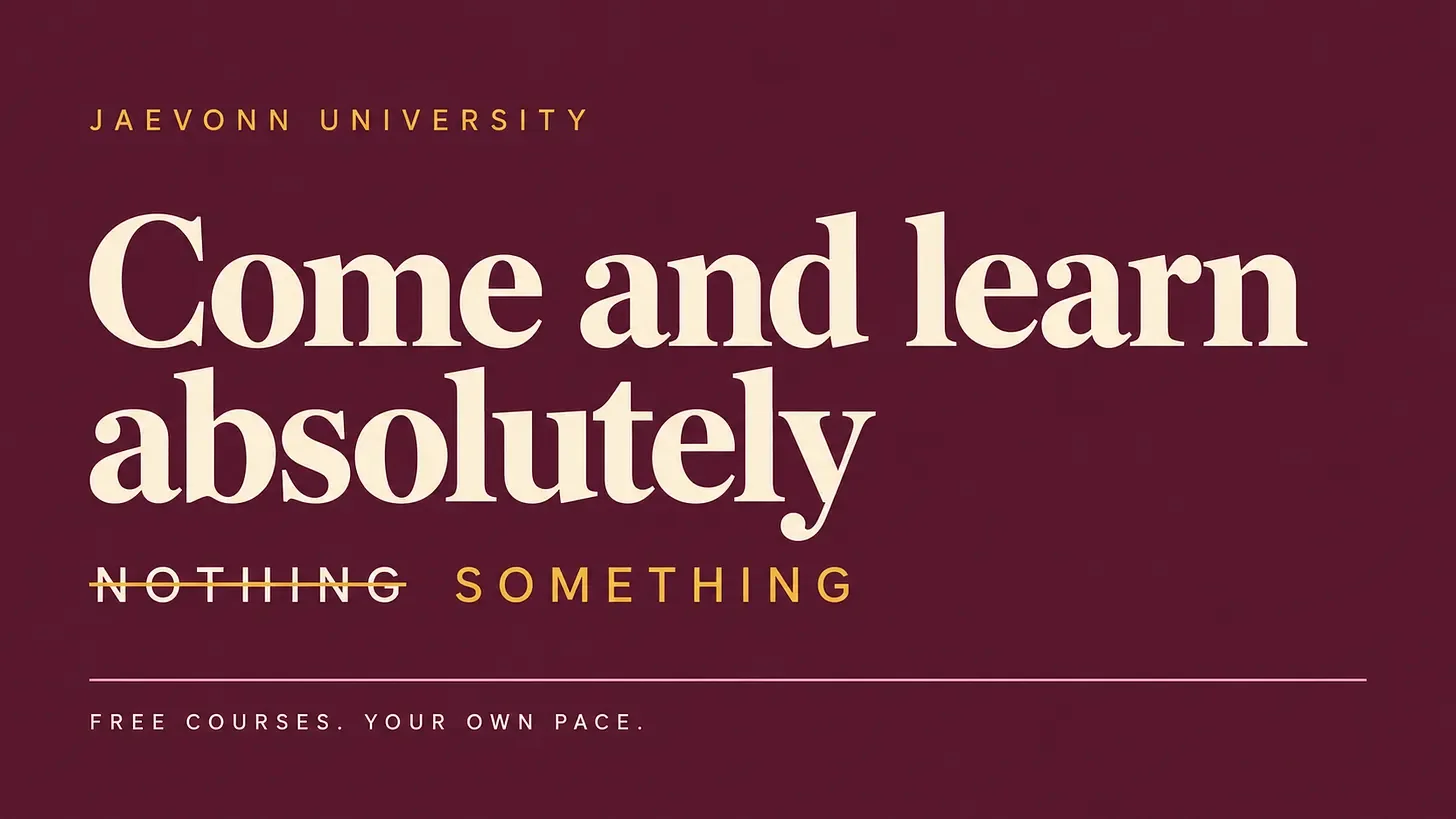
JAEVONN UNIVERSITY started as a joke, a flyer inviting people to come and learn absolutely nothing. Now it’s a real online campus. It isn’t accredited, and I’m not pretending it is. It’s an interactive experience where the courses come from my own work: law through my lyrics, art through my drawings, philosophy through my Life Logs.
I didn’t need anybody to appoint me president of a university, commission the concept, or approve the merch. I needed to understand the resources in front of me and put them together. It wasn’t easy and success isn’t guaranteed, but ten years ago I couldn’t have built it. That’s what manufacturing advantages looks like. Sometimes the biggest cheat code is realizing you don’t have to wait for somebody else to build the thing you want to be part of.
Learning Is a Cheat Code. Knowing What to Learn Is a Bigger One.
Everybody talks about working harder. We should talk more about deciding what deserves the effort. You can get exceptional at something the market barely values, make a brilliant product nobody knows exists, or earn an advanced degree and still struggle financially. I’ve run into versions of all of that. That’s why the mechanics matter: selling art means understanding buyers, pricing, and positioning, not just composition, and releasing music means understanding the business around it.
Here’s what people underestimate: knowledge is transferable. My marketing education doesn’t turn off when I’m making art, and my legal training doesn’t disappear when I’m building a business. Once I understand a principle, I look for every other place it applies. Every discipline teaches me something about the others, and that advantage keeps compounding.
The Real Cheat Code Is Compounding.
An advantage is useful on its own. Advantages get dangerous when they reinforce each other. My art builds a recognizable brand, the brand sells products, the products introduce people to my music, and my writing explains the ideas behind all of it. My legal education shapes how I handle ownership, and my marketing background shapes how I find an audience. That’s not a list of accomplishments. It’s a system.
Think about the difference between making a thousand dollars once and owning an asset that keeps producing revenue. I don’t want to win once and go back to the starting line every time I chase something new. I want my knowledge, catalog, relationships, and reputation to compound, and eventually open doors for the people connected to what I’m building. I don’t just want to win the game. I want to get to the point where I can change how it’s played.
Losing Is Expensive. I Know the Price.
Everybody calls failure a learning opportunity, and sometimes it is. But let’s not romanticize it. Losing gets into your sleep, your relationships, your confidence, your health, and your ability to make decisions without fear. When the losses stack up, they change how you see yourself: your mind, your body, your soul, your psyche. I know what it’s like to make products people admire and then watch them not buy, and to rack up streams and see money that looks nothing like what a few million plays would suggest.
Those experiences didn’t make me indifferent to success. They made me more determined to get it. I want financial stability, creative freedom, and the ability to provide for my future family, and I don’t think any of that is shallow. I don’t want to be an inspirational example of somebody who endured hardship with grace. I want to be somebody who got out of it and built something on the other side. I refuse to make a permanent identity out of circumstances I’m actively working to escape.
The Codes You Haven’t Found Yet.
Most people underestimate what they’re already holding. Maybe you speak more than one language, grew up around a family business, or understand a community better than any outsider could. Maybe you’ve spent years building a skill you think is ordinary only because everybody around you has it too.
The question isn’t just what you’re good at. It’s what your combination lets you do better than someone without it. For me, that’s creativity, law, branding, and business. For you, it might be engineering and finance, construction and real estate, or a sharp read on people paired with the ability to sell. Your experiences are tools, your skills are assets, and your knowledge is leverage. You just have to learn the combination.
Enter the Code.
I see that exchange between Sukuna, Yuji, and Yuta differently now. Sukuna didn’t want a speech about the dignity of struggle. He wanted to know how two people he should have outclassed closed the gap so fast, and Yuta told him the truth. Sometimes the person who wins isn’t the one who worked the hardest. Sometimes it’s preparation, information, timing, or seeing an opportunity everyone else walked past.
I’m not abandoning hard work. But I’m going to use my education, my credentials, my art, my intellectual property, and every relationship and opportunity I’ve earned, and I’m going to keep manufacturing the advantages I don’t have yet. The world is already unfair, and I don’t owe it the courtesy of pretending otherwise. Learn the mechanics. Build the skills. Find your advantages. Manufacture the ones you don’t have. And when somebody asks how you did so much with what you had, tell them what Yuta told Sukuna: We cheated.
follow me on x.com/onlyonejaevonn
visit gettothecorner.com