
Hal Jordan & John Stewart was Drake & Joe Budden All This Time?!?!
September 21, 2026
WARNING: LANTERNS SPOILERS THROUGH EPISODE SIX
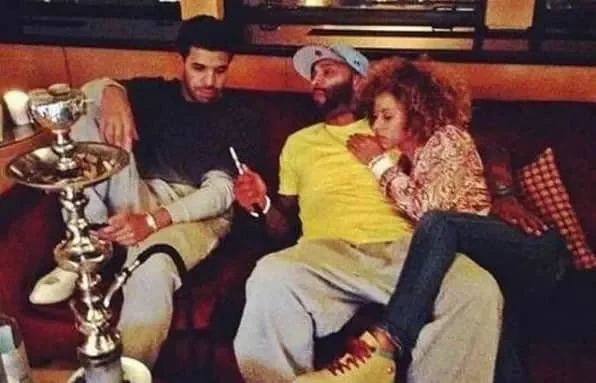
I’m six episodes into Lanterns and somewhere in the middle of watching Hal Jordan and John Stewart interact, something clicked in my head: Hal Jordan and John Stewart are Drake and Joe Budden. Not literally, of course. Joe didn’t hand Drake a Green Lantern ring, Drake was never Joe’s protégé, and Joe certainly didn’t create Drake. What I’m talking about is the relationship itself. It’s the strange dynamic between an older, extremely talented man and a younger man who comes behind him, respects him, studies him, shares some of his attributes, but eventually becomes something much larger than the older man ever became. Somewhere between admiration, expectation, disappointment, competition and resentment, the relationship stops being easily defined.
BEFORE THEY WERE PEERS

The comparison actually starts before John Stewart ever meets Hal Jordan. Lanterns opens in 1996 with young John sitting in front of the television watching Hal reveal himself to the public as Green Lantern during a televised interview. John is literally studying this man through a screen years before he’ll ever stand beside him. That immediately made me think about young Drake listening to Joe Budden. Before Drake became Drake, there was a version of him consuming Mood Muzik and figuring out his own voice while clearly absorbing things from Joe’s. Drake eventually admitted this himself in his 2019 Rap Radar interview: “I used to try to rap like Budden back in the day.” Even listening back to Room for Improvement and Comeback Season, that influence can be heard in some of Drake’s flows and delivery while he was still experimenting with who he wanted to be as a rapper.
That makes John watching Hal on television feel almost like Drake studying Mood Muzik. Before you can disagree with somebody as a peer, sometimes you first encounter them as a student. The image becomes even more interesting because years later both relationships become personal. In April 2009, JoeBuddenTV uploaded an interview with Drake titled DRAKETV. Joe’s own description said he supported Drake “whole heartedly” and praised the organic attention Drake was receiving as evidence that hard work and good music could still lead to success. Joe liked this young man, and the respect wasn’t one-sided. Years later, Joe would say the two had conversations dating back to before So Far Gone, while Drake would openly acknowledge the influence Joe’s rapping had on his own early style.
WHEN THE HIERARCHY FLIPS
That history is what makes the eventual conflict more complicated than two rappers simply disliking each other. There’s something psychologically strange about admiring somebody when the hierarchy between you is obvious and then living long enough to watch that hierarchy reverse. Joe was already Joe Budden while Drake was still trying different flows and building his identity. Then Drake didn’t merely become successful; he became one of the biggest rappers in the history of the genre. Suddenly the younger artist doesn’t need validation from the older artist anymore, while the older artist is still evaluating his albums, progression and artistic decisions.
The tension exploded during the Views era. Joe’s criticism wasn’t coming from somebody who had always disliked Drake; he repeatedly described himself as a fan and argued that he missed the Drake who set trends rather than followed them. There’s also some context that gets forgotten whenever those old rant clips circulate. While discussing the reaction to the rant, Joe directly blamed some of its extreme intensity on Adderall, saying, “The Adderall. I’ve never cared that much,” while also pointing out that the viral clip stripped the conversation of the laughter and context surrounding it. So even Joe admits the delivery was heightened, but underneath it was a real belief: he thought Drake was capable of more, and he was judging him according to the version of Drake he believed was possible.
That kind of expectation can be more irritating than hatred because expectation carries an implication: I know what you’re supposed to be. Eventually the person receiving that criticism starts wondering, “According to who?” That feels like John Stewart’s problem with Hal. Hal has experience, history and accomplishments, but John doesn’t want Hal’s experience to become permanent jurisdiction over what John should become. The fact that John once watched Hal on television doesn’t mean the adult John has to spend his life accepting Hal’s definition of what a Green Lantern is supposed to be. Admiration can introduce you to the path without giving the person you admired ownership over wherever that path takes you.
ARTISTIC AUTHORITY VS. THE SCOREBOARD
With Drake and Joe, that same disagreement turns into a battle over two completely different forms of authority. Drake has rarely responded to Joe like somebody begging an elder for approval. His posture is closer to, “Why exactly do you get to tell me what my career is supposed to look like?” Joe argues from artistic knowledge. Drake argues from outcome. Joe can say, “I know rap well enough to tell you when the music isn’t reaching your potential.” Drake can point at the careers and ask why that knowledge never produced anything remotely comparable to what he accomplished. Joe is grading the possession while Drake is pointing at the scoreboard. Neither argument completely defeats the other. Commercial success doesn’t automatically make every artistic decision great, but understanding artistry doesn’t automatically produce commercial success either.
Drake’s attack during the No Shopping era probably summarizes the tension better than almost anything else. He mocked “Pump It Up,” rejected the one-hit-wonder comparison and delivered the brutal line that Joe had let Drake turn into the person Joe “almost was.” What makes that insult so effective is that it doesn’t actually deny Joe’s talent. It acknowledges it and then weaponizes the difference in outcome. Drake’s argument isn’t, “You never had anything worth studying.” It’s closer to, “You had some of these ingredients too. Look where I took mine.” The coldest possible John Stewart argument toward Hal Jordan would work the same way. John could never honestly claim Hal wasn’t Green Lantern. The more devastating argument would be that Hal was the prototype and John became something Hal never managed to become.
INFLUENCE IS NOT OWNERSHIP
That’s also why I think reducing this to “Drake copied Joe Budden” misses what makes the relationship interesting. Influence is not ownership. Joe was making deeply personal, emotionally exposed rap at a time when that lane wasn’t nearly as standardized as it became later, and Mood Muzik made his internal life part of the product. Drake came along in the next generation, absorbed Joe alongside other influences, gradually found his own voice and took emotional accessibility in rap to a commercial scale Joe never approached. The predecessor can leave fingerprints on the successor without owning the successor’s identity. In fact, Drake openly acknowledging that he once tried to rap like Joe makes the later conflict more interesting, not less. He doesn’t have to deny the influence in order to argue that he eventually became his own thing.
One of my favorite elements of Lanterns so far is that the boy who watched Hal Jordan on television eventually gets close enough to see Hal Jordan as a flawed human being. That’s different from being disappointed by somebody you never admired. John can remember what Hal represented to him while simultaneously rejecting the man standing in front of him. By Episode Six, years have passed and John has attempted to separate himself from the Lantern life altogether, but Hal’s death pulls him right back into that history. John becomes involved with Hal’s burial, retrieves his ring and eventually activates a preserved holographic version of him. You can outgrow somebody, reject them and resent them without erasing the role they played in your development.
YOU DON’T ARGUE THIS MUCH WITH SOMEBODY WHO DOESN’T MATTER
The same thing explains why Drake and Joe have never seemed capable of becoming completely indifferent toward one another. Joe has discussed countless rappers, but Drake activates something specific in him. Drake, meanwhile, has enough fame and success to ignore practically any critic alive, yet Joe’s criticism has repeatedly gotten personal responses from him. These are two men who have spent years suggesting the other person’s judgment doesn’t matter while repeatedly demonstrating that it matters enough to answer. Their antagonism is almost evidence of the history itself.
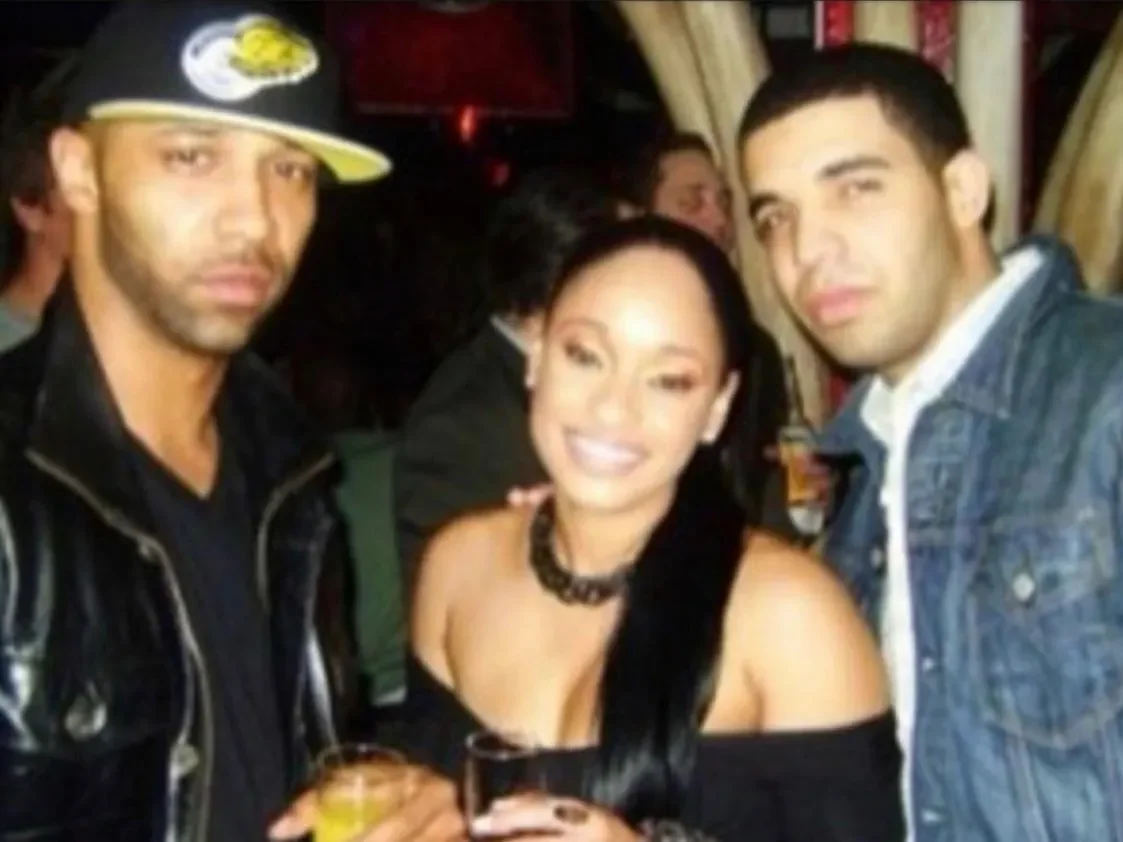
The strongest connection between these two relationships might be that they aren’t only arguing about each other; they’re arguing over ownership of the story between them. Joe can look at Drake and say, “I remember you before all of this. I know how talented you are. I remember what you sounded like when you were still finding yourself.” Drake can hear that as, “Because you knew me early, you think you still have some authority over what I’m supposed to become.” Hal can look at John as the younger Lantern who came after him, while John can remember that long before they ever met, he was already the kid sitting in front of a television watching this man become a symbol.
THE PEOPLE WE OUTGROW STILL LEAVE FINGERPRINTS
That’s what turns this from a rap beef comparison into something more human. What do we owe the people we studied before finding ourselves? Does recognizing somebody’s potential early give you permanent authority to evaluate what they become? If you eventually surpass somebody you once admired, does their influence become less real? John Stewart can disagree with Hal Jordan, resent him and refuse to become him, but through these first six episodes, he can’t completely tell the story of John Stewart without Hal Jordan appearing somewhere inside it. Joe Budden doesn’t own Drake’s success, and Drake doesn’t owe Joe credit for becoming Drake, but the history is still the history. Before Drake became one of the biggest artists alive, he was trying to rap like Budden, listening to the music that came before him, and eventually standing in front of Joe Budden’s camera while Joe publicly told people he believed in this young artist.
Joe saw something in Drake before the whole world saw it, and Drake eventually became so successful that he no longer needed Joe Budden to tell him what he could become.
Then Joe kept telling him anyway.
Maybe Hal Jordan and John Stewart really were Drake and Joe Budden all this time.
visit gettothecorner.com
follow me on x.com/onlyonejaevonn