
I Finally Figured Out Jay-Z
He’s not the villain his enemies need. He’s not the god his glazers built. He’s a man who learned early that if he don’t put himself first, nobody will.
August 14, 2026
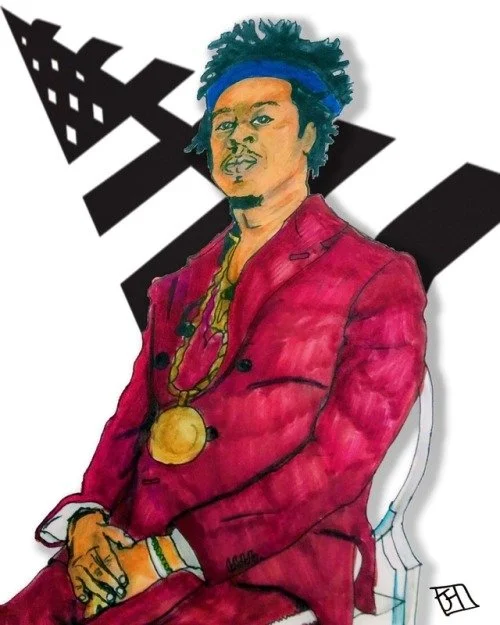
I finally figured out what Jay-Z is.
His enemies make him a villain. His glazers make him a God. But in his essence Jay is an antihero — not good, not bad, just a man. He serves himself fully, and sometimes that self-service lines up with your moral compass, and other times it don’t. That’s the whole thing. That’s the man.
I’m not a psychologist, but this has to be the result of innate ambition colliding with unfavorable circumstance. You don’t get a man like this from comfort. You get him from the crash.
The Father Taught Him to See
Jay was raised in the Marcy Projects in Bed-Stuy, and his father, Adnis Reeves, left when Shawn was somewhere around nine to eleven. But before he left, he gave the boy something that outlasted him: he taught him how to observe.
He tells it himself in Decoded. His pops was “crazy for detail” — he’d walk Jay and his cousin B-High through Times Square back when it was still Forty Deuce, and make it a game. Walk fast (so anybody following loses you), and remember everything you passed. Which bodega sold detergent, which one only had candy and chips, which was run by Puerto Ricans, which by Arabs. He was, in Jay’s words, teaching him to be “confident and aware of my surroundings.” He put it plainer another time: his father taught him chess, and taught him that life was a giant chessboard where you had to be fully present in the moment and thinking a few moves ahead.
Sit with that. That one training exercise built two of the most important muscles Jay ever developed.
One, the memory — the reason this man raps entire albums without writing a single word down. Two, and this is the big one: pattern recognition. When you’re that observant, you start seeing the shape of things before they finish forming. And when you take that gift and drop it into the chaos of a New York corner during the crack era, you get a rare crash course — knowing when to strike, when to retreat, and everything in between.
Jay never hid where he learned it. “I sold drugs for the same reason I sell albums — it’s a product and I’m pushing it.” Same eyes on the corner as in the boardroom. Same chessboard.
Watch the Kaepernick Timeline. That’s the Whole Thesis in One Move.
If you want to see the antihero operate in real time, watch how Jay played the Kaepernick situation, because it’s a clean read.
When Kap was kneeling, Jay stood with him — and he knew exactly how long to stand. He turned down the Super Bowl halftime show himself. He was part of a wave: Rihanna said no (“I just couldn’t be a sellout. I couldn’t be an enabler”), Cardi B passed on it too. For a minute, being down with Kap was the position, and Jay held it.
Then he read the board. He saw the moment when Kap’s stance started losing its legs in the mainstream — and he saw an opening for himself. In August 2019 he signed Roc Nation to a long-term partnership with the NFL. The same league. Sitting right next to Roger Goodell, asked whether he’d kneel or stand, he said: “I think we’ve moved past kneeling.”
The backlash was instant. Kap’s camp called it cold. Eric Reid — the man who was still kneeling — called it a money move and said the league got to “hide behind [Jay’s] black face.” And you know what? Both things are true at once. Jay genuinely stood with Kap when it counted. And Jay genuinely stepped over him when the timing served Jay. That’s not a contradiction to him. That’s just the next move.
This is what makes him complicated. This is what makes him hated. His critics can’t hold two ideas in one hand — that a man can be extremely self-serving and still do real good — so they pick one and scream it.
Brooklyn, Barclays, and Times Square
Did Jay screw over people in Brooklyn for the Barclays Center? From what I heard — probably. But let me be fair about how, because the truth is more interesting than the meme.
Jay’s actual ownership was tiny. Forbes pegged it at about one-fifteenth of one percent of the Nets and around a fifth of a percent of the arena — pennies, in billionaire terms. He turned roughly a million into a couple million and sold out in 2013. His real value to that project was never the money. It was his face.
The Atlantic Yards deal used eminent domain to take property and displace people, and it sold itself on “Jobs, Housing, and Hoops” — a promise of 2,250 affordable units. Jay, the Brooklyn son, was the cultural cover that made that pill go down easy in the borough’s Black neighborhoods. One opposition leader taunted him directly: “Hova, you should write a song about eminent domain.” And here’s the part that stings — two decades later, only about 1,374 of those 2,250 affordable units exist. Hundreds still owed. The developers even got penalties waived after threatening to sue.
Now, I’ll keep it honest: the missing housing is on the developers, not on Jay’s signature. His guilt there is reputational — he lent the credibility, he didn’t pour the concrete. But that is the antihero cost. When you’re the face, you own the shine and the shadow.
And the Times Square casino? Roc Nation teamed with Caesars and SL Green to drop a $5.4 billion casino right in the middle of Times Square. Was he probably about to help ruin it? Probably. Because gambling produces degeneracy and invites every wicked spirit in the room. Maybe he intended nothing but good — why wouldn’t he want a win for the city? But casinos bring out the worst in people. I’ve walked through them myself and watched the soul leak out of people’s eyes, watched somebody lose a square foot of their home with every pull of the slot machine.
That one, the people caught. In September 2025 a community board voted it down 4–2. Broadway organized, 35-plus organizations lined up against it, and the bid died. The research backs the instinct, too: the National Council on Problem Gambling estimates problem gambling costs the country around $14 billion a year — job loss, bankruptcy, families cracked open. Jay was on the wrong side of that one, and Times Square knew it.
But He Does the Good, Too — And He Ain’t Required To
Here’s where his critics get quiet, because the man puts his money where the wound is.
Through the Shawn Carter Foundation — the one he built with his mother Gloria in 2003 — he’s directed over $25 million toward sending kids to college. Not honor-roll kids either: kids with low GPAs, kids who were locked up, teen mothers, kids who slept in shelters. The ones the system already wrote off. Around 145 scholars a year. HBCU bus tours since 2007.
He pays legends’ tax bills. Lil Wayne said it out loud: “That man helped me with my taxes… Jay don’t want me to tell nobody… He’s a real friend.” He co-founded the REFORM Alliance to fight the probation-and-parole trap. Team Roc hired the lawyers to fight 21 Savage’s ICE detention, dropped a million on the Midwest Innocence Project to help free a man who did 23 years for nothing, and produced the Kalief Browder documentary so the world couldn’t look away. He gets people out of jail. He gets artists out of contracts. He does a lot of stuff he is not required to do.
So why does a man who does all that still catch this much heat?
The Real Reason They Can’t Stand Him
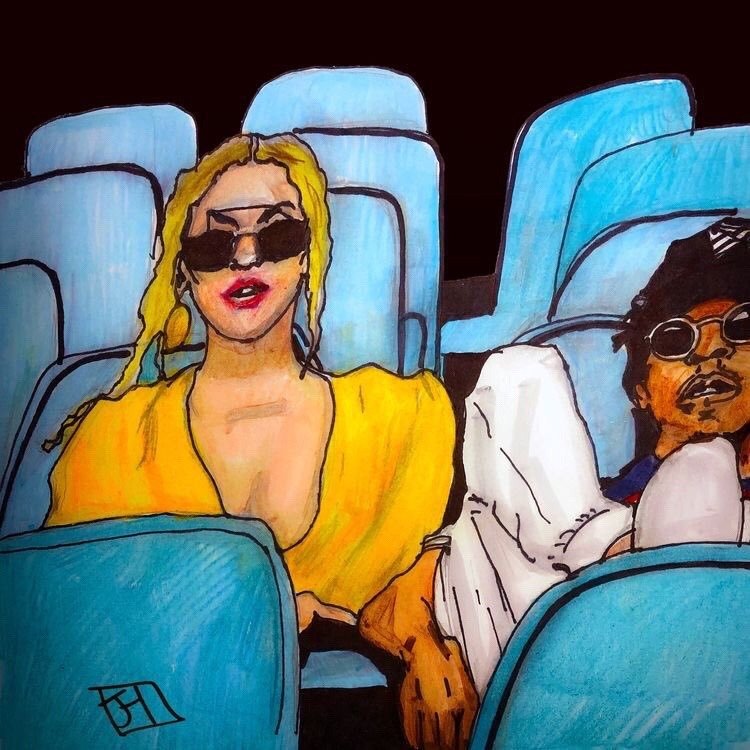
Because he’s a champion of capitalism who still presents himself as a man of the people. And people can’t hold that juxtaposition.
He became hip-hop’s first billionaire in 2019 and he’s north of $2.8 billion now — Rocawear, Armand de Brignac, D’Ussé, Tidal, Roc Nation. Ownership, not royalties. “I’m not a businessman, I’m a business, man.” And in 2025, when GQ pressed him on being a capitalist, he didn’t flinch: “I see the world for what it is, not for what I want it to be. I’m a realist.”
That’s the crime, to his critics. Not that he’s rich. That he won’t apologize for the machine while also claiming Marcy. They want him to pick — voice of the people OR billionaire — and he refuses, because to him those were never two different men. It was always the same survival instinct scaled up. The corner taught him: put yourself first, because nobody’s coming to save you. He just never turned it off.
So Jay, like the rest of us, is human. But he operates on a level of self-preservation so extreme it makes other people uncomfortable to be near. And that exact thing — the thing they hate — is the same reason he’ll never lose. Even if he loses some people along the way.
He’s not your hero. He’s not your villain. He’s the antihero. And the sooner you accept that a man can serve himself completely and still leave the world a little better on his way up, the sooner you actually understand Jay-Z.
Maybe the sooner you understand yourself.
visit gettothecorner.com
follow me on x.com/onlyonejaevonn